Um porteiro em São Paulo cultiva uma horta na cobertura do prédio. Sem perceber direito, ela vira o único ponto de contato entre vizinhos que moram porta a porta há anos sem nunca ter se falado.
Seu Edmilson tinha cinquenta e sete anos e trabalhava na portaria do Edifício Aurora havia dezoito, um prédio de vinte e dois andares na Vila Mariana onde a maioria dos moradores sabia o nome dele, mas ele sabia muito mais sobre a vida deles do que o contrário.
Começou a horta na cobertura por acidente, mais ou menos. O síndico tinha deixado uma área abandonada lá em cima, perto da caixa d’água, cheia de entulho de uma reforma antiga. Edmilson pediu pra limpar aquilo no tempo livre, e o síndico, sem se importar muito, deixou.
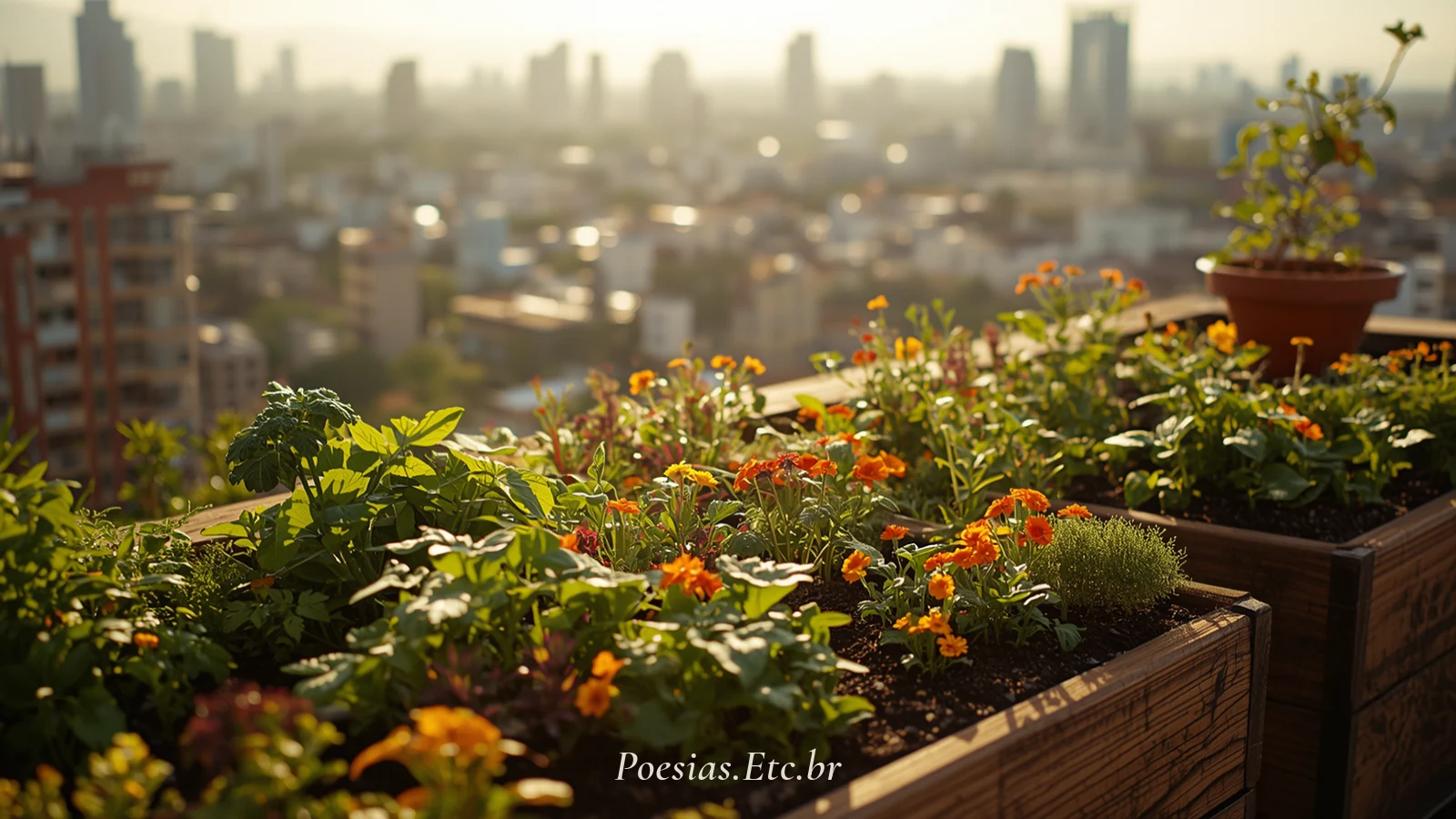
O que começou como um canteiro pequeno de tempero — manjericão, cebolinha, coisas que ele usava na própria cozinha — foi crescendo devagar ao longo de dois anos até virar uma horta de verdade, com caixas de madeira que ele mesmo construiu, tomate, alface, algumas flores que ele plantou só porque achava bonito.
* * *
Ninguém subia lá, no começo. O prédio tinha aquele tipo de isolamento comum em cidade grande, onde vizinho de porta ao lado troca cumprimento no elevador e nada mais, cada um trancado no próprio apartamento com a própria vida.
Edmilson conhecia os padrões de todo mundo sem precisar perguntar. Sabia que dona Amélia, do décimo andar, não saia de casa fazia mais de um ano, desde que ficou viúva, e só recebia entrega de mercado. Sabia que o rapaz do décimo quinto, Rodrigo, trabalhava até tarde demais, sempre voltando depois das dez, sempre parecendo mais cansado que o normal pra idade dele. Sabia que a família do sétimo andar tinha brigado feio com os do oitavo por causa de barulho, e os dois números não se falavam mais desde então.
Um dia, sem planejar direito, Edmilson deixou um punhado de tomates colhidos na porta de dona Amélia, com um bilhete simples: “Da horta da cobertura. Espero que goste.”
* * *
Ela desceu pessoalmente pra agradecer, coisa que não fazia fazia meses — sair do apartamento, quer dizer, não só agradecer.
— Ninguém planta mais nada de verdade, hoje em dia — disse ela, na portaria, segurando o saquinho vazio que Edmilson tinha usado. — Meu marido tinha uma horta, sabia? Lá na casa que a gente tinha antes de vir pro apartamento.
— A senhora quer ver a daqui? É pequena, mas fica bonita de tarde.
Dona Amélia hesitou, e depois, pela primeira vez em mais de um ano, subiu num elevador pra algum lugar que não fosse só o próprio andar.
* * *
A partir daí, Edmilson começou a deixar coisas de propósito. Um pouco de alface pra família do sétimo andar. Manjericão fresco pro Rodrigo, com um bilhete dizendo que fazia bem pra insônia, colher à noite e cheirar antes de dormir — conselho de avó que ele mesmo tinha herdado, sem saber direito se funcionava, mas parecia um jeito de dizer que ele devia descansar mais, sem soar intrometido.
Rodrigo apareceu na cobertura uma noite de sábado, surpreso ao encontrar Edmilson lá regando os canteiros mesmo fora do horário de trabalho.
— O senhor não descansa nunca?
— Isso aqui é descanso, pra mim. — Edmilson deu de ombros. — Você que devia estar descansando. Que horas você chegou hoje?
Rodrigo riu, sem graça. — Não pergunta.
Ficaram conversando um tempo, sobre nada em particular, e foi a primeira conversa de verdade que Rodrigo tinha tido com alguém do prédio em meses.
* * *
A ideia da reunião veio de dona Amélia, que sugeriu, meio de brincadeira, que Edmilson devia fazer um jantar lá em cima pra celebrar a primeira colheita grande de tomates.
Edmilson achou estranho a princípio — não era função de porteiro organizar evento social — mas topou, e colocou um bilhete no mural do saguão convidando quem quisesse.
Apareceram doze pessoas, número que surpreendeu o próprio Edmilson. Dona Amélia levou um bolo. Rodrigo levou vinho, mesmo cansado do trabalho. A família do sétimo andar apareceu, e por acaso ou não, a família do oitavo também, e ficaram educadamente em lados opostos da cobertura a noite inteira, mas pelo menos não saíram no meio.
Edmilson ficou perto das caixas de tomate, servindo salada que tinha feito com a própria colheita, sentindo-se estranhamente nervoso, como anfitrião de festa que nunca esperou dar.
* * *
No meio da noite, o síndico, que também tinha aparecido, ergueu a taça e pediu atenção.
— Queria propor um brinde — disse, olhando pra Edmilson. — Pro Edmilson, que transformou um monte de entulho numa coisa que, sem a gente perceber direito, virou o único lugar desse prédio inteiro onde a gente realmente se conhece.
Houve aplauso, gentil, sincero, e Edmilson sentiu o rosto esquentar de um jeito que não sentia fazia tempo — não por vergonha, mas por ser visto, de verdade, como pessoa e não só como função.
— Não fiz por isso — disse, quando o barulho baixou. — Só queria plantar uns tomates.
— Às vezes é isso que basta — disse dona Amélia, do lado dele. — Um motivo pequeno pra gente aparecer no mesmo lugar.
* * *
Depois daquela noite, a cobertura virou ponto de encontro informal, não todo dia, mas com frequência suficiente pra que os moradores começassem a se cumprimentar pelo nome no elevador, não só com aceno educado.
Edmilson continuou de porteiro, claro. Continuou abrindo a porta, recebendo encomenda, anotando visitante. Mas agora, quando alguém descia pra portaria, parava pra perguntar como estava o pé de tomate, ou se o manjericão precisava de mais sol, e essas perguntas pequenas viraram um jeito de dizer, sem precisar dizer diretamente, que ele importava ali como gente, não só como serviço.
Ele achou que isso, no fim, valia mais que qualquer colheita.
The Rooftop Garden
Edmilson was fifty-seven and had worked the front desk at the Aurora building for eighteen years, a twenty-two-story building in the Vila Mariana neighborhood of São Paulo where most residents knew his name, but he knew far more about their lives than they did about his.
The garden on the rooftop started by accident, more or less. The building manager had left an abandoned area up there, near the water tank, full of debris from an old renovation. Edmilson asked to clean it up in his free time, and the manager, not caring much either way, let him.
What started as a small herb bed — basil, chives, things he used in his own kitchen — grew slowly over two years into a real garden, with wooden planter boxes he built himself, tomatoes, lettuce, some flowers he planted just because he thought they were pretty.
* * *
No one went up there at first. The building had that particular kind of isolation common to big-city living, where the neighbor next door exchanges a nod in the elevator and nothing else, each person locked inside their own apartment with their own life.
Edmilson knew everyone’s patterns without needing to ask. He knew Dona Amélia, on the tenth floor, hadn’t left her apartment in over a year, since she’d been widowed, and only ever received grocery deliveries. He knew the young man on the fifteenth floor, Rodrigo, worked far too late, always coming home after ten, always looking more exhausted than someone his age should. He knew the family on the seventh floor had had a bad falling-out with the eighth over noise, and the two apartments hadn’t spoken since.
One day, without quite planning it, Edmilson left a handful of picked tomatoes at Dona Amélia’s door, with a simple note: “From the rooftop garden. Hope you enjoy them.”
* * *
She came down in person to thank him, something she hadn’t done in months — leaving the apartment, that is, not just saying thank you.
“Nobody really grows anything anymore,” she said, at the front desk, still holding the little bag Edmilson had used. “My husband had a garden, you know. At the house we had before moving to the apartment.”
“Would you like to see the one up here? It’s small, but it’s pretty in the afternoon.”
Dona Amélia hesitated, and then, for the first time in over a year, rode an elevator somewhere that wasn’t just her own floor.
* * *
From then on, Edmilson started leaving things on purpose. A little lettuce for the family on the seventh floor. Fresh basil for Rodrigo, with a note saying it helped with sleeplessness, pick a leaf at night and smell it before bed — a grandmother’s remedy he’d inherited himself, not quite sure if it worked, but it seemed like a way to say he should rest more, without sounding nosy.
Rodrigo showed up on the roof one Saturday night, surprised to find Edmilson there watering the beds even off the clock.
“Don’t you ever rest?”
“This is rest, for me.” Edmilson shrugged. “You’re the one who should be resting. What time did you get in today?”
Rodrigo laughed, a little embarrassed. “Don’t ask.”
They talked a while, about nothing in particular, and it was the first real conversation Rodrigo had had with anyone in the building in months.
* * *
The idea for the gathering came from Dona Amélia, who suggested, half joking, that Edmilson should throw a dinner up there to celebrate the first big tomato harvest.
Edmilson found the idea odd at first — organizing a social event wasn’t a doorman’s job — but he went along with it, posting a note on the lobby board inviting anyone interested.
Twelve people showed up, a number that surprised even Edmilson. Dona Amélia brought a cake. Rodrigo brought wine, exhausted from work but there anyway. The family from the seventh floor came, and whether by coincidence or not, so did the eighth floor family, and they stayed politely on opposite sides of the roof all night, but at least they didn’t leave.
Edmilson stood near the tomato boxes, serving salad he’d made from his own harvest, feeling strangely nervous, like a host at a party he’d never expected to throw.
* * *
Partway through the night, the building manager, who’d also shown up, raised his glass and asked for everyone’s attention.
“I want to propose a toast,” he said, looking at Edmilson. “To Edmilson, who turned a pile of construction debris into something that, without any of us quite noticing, became the only place in this whole building where we actually know each other.”
There was applause, gentle, sincere, and Edmilson felt his face warm in a way it hadn’t in a long time — not from embarrassment, but from being seen, truly, as a person and not just a role.
“I didn’t do it for this,” he said, once the noise died down. “I just wanted to grow some tomatoes.”
“Sometimes that’s all it takes,” said Dona Amélia, beside him. “A small enough reason for people to show up in the same place.”
* * *
After that night, the rooftop became an informal gathering spot, not every day, but often enough that residents started greeting each other by name in the elevator, not just a polite nod.
Edmilson kept working the front desk, of course. Kept opening the door, receiving packages, logging visitors. But now, when someone came down to the lobby, they stopped to ask how the tomato plant was doing, or whether the basil needed more sun, and those small questions became a way of saying, without having to say it outright, that he mattered there as a person, not just as a service.
He figured that, in the end, was worth more than any harvest.
O que você achou?
Escreva o que este texto provocou em você. Leio tudo o que chega.