Um pescador na Bahia recebe a notícia de que o filho quer se mudar pra cidade grande e não sabe se o que sente é medo de ficar sozinho ou medo de que o filho repita a vida dele.
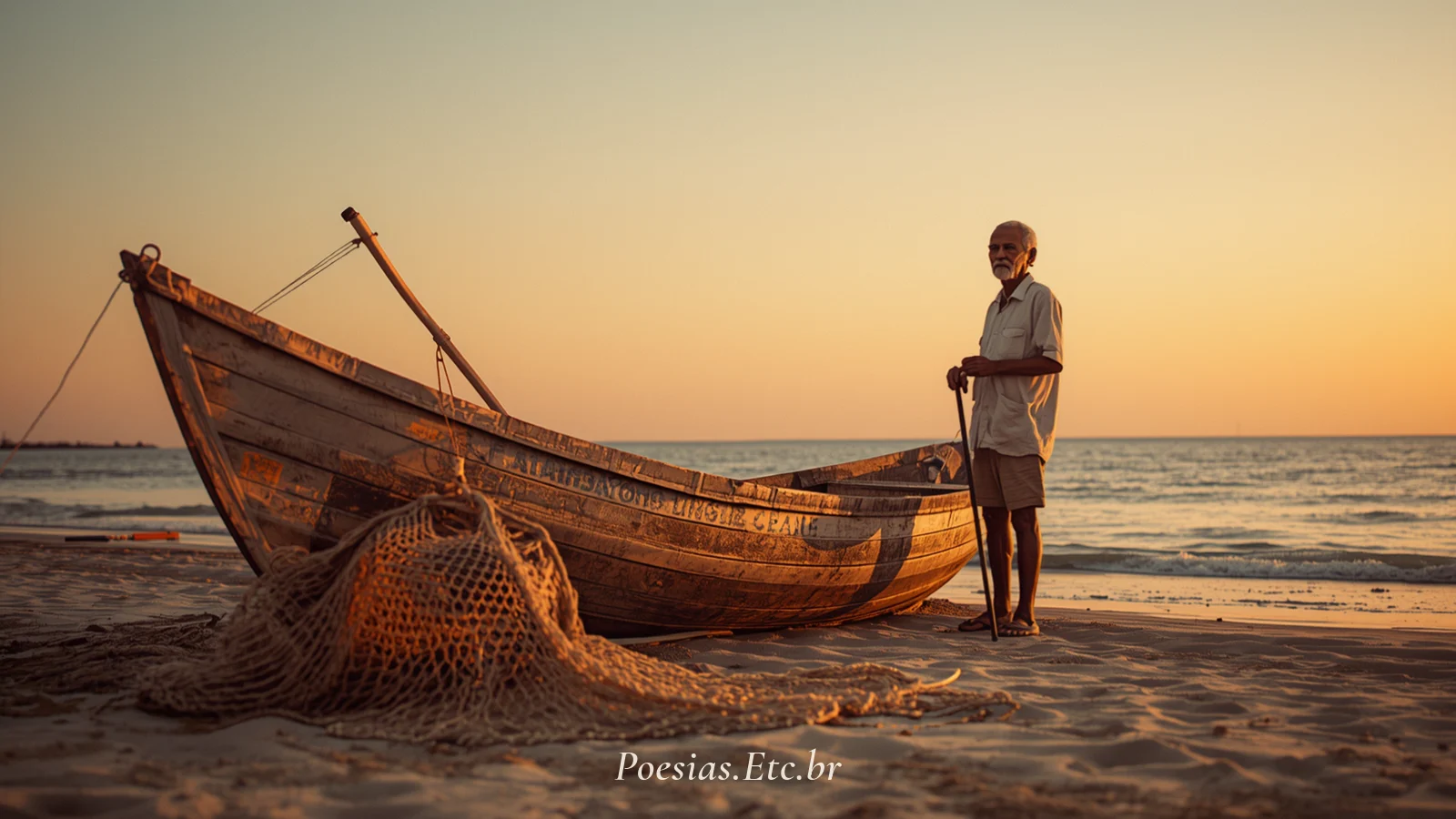
Seu Raimundo tinha sessenta e dois anos e conhecia a maré de Itacaré melhor do que conhecia o próprio rosto no espelho.
Saía todo dia antes do sol, na jangada que tinha sido do pai dele e antes disso do avô, remava um trecho e depois soltava a vela quando o vento pegava direito, e voltava com o que o mar quisesse dar. Alguns dias era muito. Outros, quase nada. Raimundo tinha aprendido, décadas atrás, que discutir com o mar era perda de tempo que ele não tinha.
O filho, Tiago, vinha ajudando desde os doze anos, primeiro só carregando balde, depois consertando rede, depois indo junto na jangada nas manhãs em que a escola permitia. Aos vinte e dois, Tiago sabia tudo que Raimundo sabia, e tinha aprendido rápido, do jeito que gente nova aprende quando tem talento de verdade pra alguma coisa.
Foi por isso que a notícia doeu tanto quando chegou.
* * *
— Pai, eu passei no curso técnico. Em Salvador.
Estavam na praia, limpando a rede depois de uma manhã fraca, o sol já alto demais pra ser confortável. Raimundo continuou com as mãos ocupadas, sem levantar os olhos.
— Curso técnico de quê?
— Refrigeração. Ar-condicionado, essas coisas. Salário começa bom, e com experiência dá pra ganhar bem mais que aqui.
Raimundo puxou um nó da rede que não precisava de conserto nenhum, só pra ter o que fazer com as mãos enquanto pensava no que dizer.
— E o mar?
— O mar vai continuar aqui, pai. Eu não vou continuar pescando a vida inteira só porque o senhor pescou e o avô pescou.
Não era acusação. Raimundo sabia disso, mesmo sentindo como se fosse.
* * *
Passou a semana seguinte quieto, mais quieto do que o normal, e a mulher, dona Cida, percebeu antes dele mesmo admitir.
— Você tá com raiva do menino.
— Não tô com raiva.
— Tá com alguma coisa.
Raimundo ficou olhando pro mar pela janela da cozinha, que dava certo pro trecho onde ele pescava havia quarenta anos.
— Eu não sei se é raiva ou se é medo.
— Medo de quê?
Ele pensou um tempo antes de responder, porque não tinha certeza da resposta nem pra si mesmo.
— Medo de ficar sozinho no mar. E medo de que ele fique preso numa cidade que não é dele, do jeito que eu ia ficar preso se meu pai tivesse me deixado ir pra escola em vez de me botar na jangada com sete anos.
Cida ficou quieta um instante. — Seu pai te impediu de estudar?
— Nunca conversamos sobre isso de verdade. Ele só decidiu, e eu obedeci, e nunca soube se eu ia gostar de outra vida porque nunca experimentei.
* * *
Na manhã seguinte Raimundo chamou Tiago pra sair na jangada, coisa que não fazia mais toda vez, já que o filho tinha o próprio horário e as próprias saídas.
Saíram antes do sol, do jeito de sempre, e ficaram um tempo em silêncio enquanto o céu clareava, só o som da vela pegando vento e da água batendo no casco.
— Eu nunca te perguntei se você gostava disso — disse Raimundo, olhando pra frente, não pro filho. — Só assumi que gostava, porque você era bom nisso.
Tiago demorou pra responder. — Eu gosto, pai. De verdade. Não é que eu odeie o mar ou queira fugir daqui.
— Então por quê?
— Porque eu quero saber se eu escolhi isso ou se só nunca me perguntei se tinha outra coisa. — Ele olhou pro pai agora. — Igual o senhor disse que nunca soube com seu pai.
Raimundo sentiu um aperto no peito que não era raiva nenhuma. Era outra coisa, mais parecida com reconhecimento.
— Eu tenho medo de você ir pra cidade e descobrir que também não gosta de ar-condicionado. E aí ficar preso de novo, só que numa jaula diferente.
— Pode ser que eu descubra isso. — Tiago deu de ombros, um gesto jovem, sem peso nenhum de derrota nele. — Mas aí eu vou saber que descobri sozinho, não porque alguém decidiu por mim antes de eu ter chance de escolher.
* * *
Voltaram com uma pesca mediana, nem farta nem fraca, e Raimundo passou o resto do dia pensando naquilo em vez de fazer os consertos que tinha planejado.
À noite, sentado na varanda com Cida, ele finalmente disse a coisa que tinha estado engolindo a semana inteira.
— Eu vou ajudar ele a se mudar.
— Sério?
— Não posso fazer com ele o que meu pai fez comigo. Decidir por ele sem nem perguntar o que ele queria.
Cida pegou a mão dele. — E se ele voltar em dois anos e disser que quer pescar de novo?
— Aí a jangada vai estar esperando. — Raimundo olhou pro mar escuro lá embaixo, quieto, respirando devagar do jeito que só faz de noite. — Mas vai ser escolha dele voltar, não obrigação de nunca ter saído.
* * *
Tiago se mudou em março, com uma mala e o dinheiro que Raimundo insistiu em dar, mesmo com o filho dizendo que não precisava.
— Não é esmola — disse Raimundo, empurrando o envelope pra mão dele. — É o que teu avô teria me dado, se tivesse pensado nisso a tempo.
Ligavam toda semana. Tiago contava do curso, da cidade, das coisas que achava estranhas e das que já tinha se acostumado. Raimundo contava da pesca, do tempo, de quanto a mulher do seu Edvaldo tinha brigado com ele por causa de uma rede emprestada.
Nenhum dos dois falava muito sobre saudade. Não precisava.
* * *
Um ano depois, Tiago ligou numa terça à noite, fora do horário combinado, e Raimundo atendeu com o coração já acelerado antes de saber se era boa ou má notícia.
— Pai, terminei o curso. Consegui vaga numa empresa boa aqui.
— Que bom, meu filho.
— Mas queria saber uma coisa. — Tiago pausou, do jeito de quem organiza a frase antes de soltar. — A jangada ainda tá boa?
— Tá. Por quê?
— Porque queria ir com o senhor no mês que vem, quando eu tiver férias. Só pra sair no mar de novo. Não pra ficar, pai, relaxa. Só pra lembrar como é.
Raimundo sorriu sozinho na cozinha, um sorriso que ninguém viu além dele mesmo.
— A jangada tá sempre esperando você. Não importa quanto tempo passe.
Desligou o telefone e ficou olhando pro mar pela janela, o mesmo trecho de sempre, quieto sob a lua, esperando com a paciência que só o mar tem — não porque precisasse de ninguém, mas porque sabia, do jeito antigo que só o mar sabe, que quem escolhe voltar sempre volta diferente do jeito que quem nunca teve escolha alguma.
High Tide
Raimundo was sixty-two years old and knew the tide at Itacaré better than he knew his own face in a mirror.
He went out every day before sunrise, in the jangada that had been his father’s and, before that, his grandfather’s, rowed a stretch and then let the sail out once the wind caught right, and came back with whatever the sea was willing to give. Some days it was plenty. Other days, almost nothing. Raimundo had learned, decades back, that arguing with the sea was a waste of time he didn’t have.
His son, Tiago, had been helping since he was twelve, first just hauling the bucket, then mending nets, then going out on the jangada on mornings school allowed. At twenty-two, Tiago knew everything Raimundo knew, and had learned it fast, the way young people do when they have real talent for something.
Which is why the news hurt as much as it did when it came.
* * *
"Dad, I got into the technical program. In Salvador."
They were on the beach, cleaning the net after a weak morning, the sun already too high to be comfortable. Raimundo kept his hands busy, not looking up.
"Technical program in what?"
"Refrigeration. Air conditioning, that kind of thing. Starting pay’s good, and with experience you can earn a lot more than here."
Raimundo pulled at a knot in the net that didn’t need fixing, just to have something for his hands while he figured out what to say.
"And the sea?"
"The sea’ll still be here, Dad. I’m not going to spend my whole life fishing just because you fished and Grandpa fished."
It wasn’t an accusation. Raimundo knew that, even though it felt like one.
* * *
He spent the following week quiet, quieter than usual, and his wife, Cida, noticed before he’d even admit it to himself.
"You’re angry at the boy."
"I’m not angry."
"You’re something."
Raimundo stood looking out the kitchen window, which faced right onto the stretch he’d fished for forty years.
"I don’t know if it’s anger or if it’s fear."
"Fear of what?"
He thought a while before answering, because he wasn’t sure of the answer himself.
"Fear of being alone out there. And fear that he’ll end up stuck in some city that isn’t his, the way I’d have been stuck if my father had let me go to school instead of putting me on the jangada at seven."
Cida went quiet a moment. "Your father stopped you from studying?"
"We never really talked about it. He just decided, and I obeyed, and I never knew if I’d have liked a different life because I never got to try one."
* * *
The next morning Raimundo asked Tiago to come out on the jangada, something he no longer did every time, since his son had his own schedule and his own trips now.
They went out before sunrise, the usual way, and stayed quiet a while as the sky lightened, just the sound of the sail catching wind and water slapping the hull.
"I never asked if you liked this," Raimundo said, looking ahead, not at his son. "I just assumed you did, because you were good at it."
Tiago took a while to answer. "I do like it, Dad. Really. It’s not that I hate the sea or want to run from here."
"Then why?"
"Because I want to know if I chose this or if I just never asked myself if there was anything else." He looked at his father now. "Like you said you never knew, with your father."
Raimundo felt a tightness in his chest that wasn’t anger at all. It was something else, closer to recognition.
"I’m afraid you’ll go to the city and find out you don’t like air conditioning either. And end up stuck again, just in a different cage."
"Maybe I will find that out." Tiago shrugged, a young man’s gesture, no weight of defeat in it. "But then I’ll know I found it out myself, not because someone decided for me before I ever got a chance to choose."
* * *
They came back with a middling catch, neither plentiful nor thin, and Raimundo spent the rest of the day thinking about that instead of doing the repairs he’d planned.
That night, sitting on the porch with Cida, he finally said the thing he’d been swallowing all week.
"I’m going to help him move."
"Really?"
"I can’t do to him what my father did to me. Decide for him without even asking what he wanted."
Cida took his hand. "And if he comes back in two years saying he wants to fish again?"
"Then the jangada’ll be waiting." Raimundo looked out at the dark sea below, quiet, breathing slow the way it only does at night. "But it’ll be his choice to come back, not an obligation he never got to leave in the first place."
* * *
Tiago moved in March, with a suitcase and the money Raimundo insisted on giving him, even with his son saying he didn’t need it.
"It’s not charity," Raimundo said, pushing the envelope into his hand. "It’s what your grandfather would have given me, if he’d thought of it in time."
They called every week. Tiago talked about the program, the city, the things he found strange and the ones he’d gotten used to. Raimundo talked about the fishing, the weather, how much old Edvaldo’s wife had scolded him over a borrowed net.
Neither of them talked much about missing each other. It didn’t need saying.
* * *
A year later, Tiago called on a Tuesday night, outside their usual time, and Raimundo picked up with his heart already racing before he knew if it was good news or bad.
"Dad, I finished the program. Got a spot at a good company here."
"That’s wonderful, son."
"But I wanted to ask you something." Tiago paused, the way someone does when they’re arranging a sentence before letting it out. "Is the jangada still holding up?"
"She is. Why?"
"Because I want to go out with you next month, when I get some time off. Just to be on the water again. Not to stay, Dad, relax. Just to remember what it’s like."
Raimundo smiled alone in the kitchen, a smile no one saw but himself.
"The jangada’s always waiting for you. No matter how much time passes."
He hung up the phone and stood looking out at the sea through the window, the same stretch as always, quiet under the moon, waiting with the patience only the sea has — not because it needed anyone, but because it knew, in the old way only the sea knows, that whoever chooses to come back always comes back different from someone who never had a choice at all.
O que você achou?
Escreva o que este texto provocou em você. Leio tudo o que chega.