Cecília herda a fazenda de café do pai e planeja vender rápido. Um homem que trabalhou a terra a vida inteira sem nunca ter nada assinado em seu nome complica essa conta.
Cecília chegou à fazenda três dias depois do enterro do pai, com uma mala pequena e a certeza de que ia ficar só o tempo necessário pra assinar os papéis.
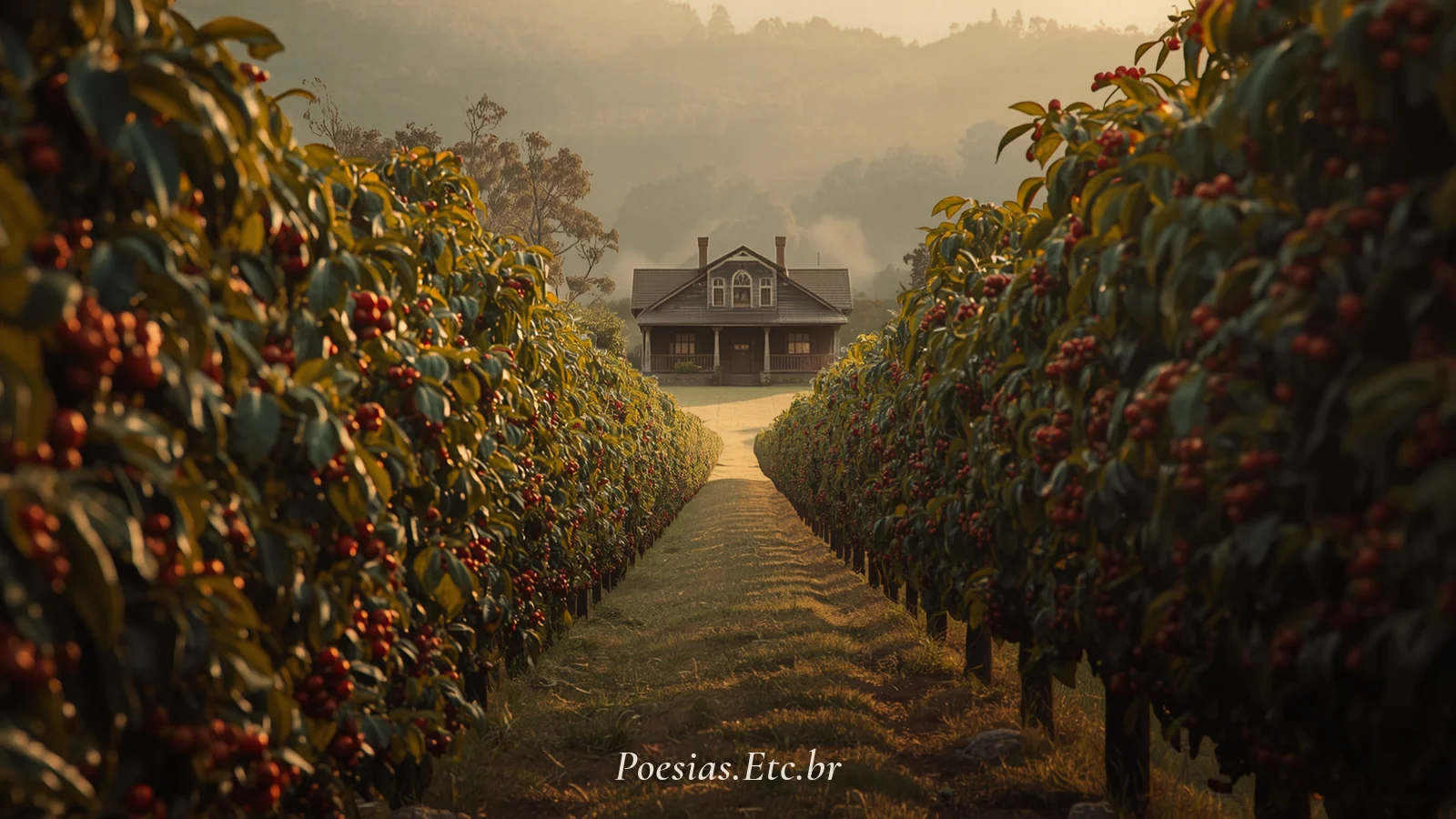
Ela morava em Belo Horizonte havia doze anos, trabalhava com logística numa empresa de transporte, tinha marido e um filho de sete anos que odiava viagem de carro. A fazenda — quatrocentos pés de café arábica numa encosta da Serra da Mantiqueira — era, pra ela, principalmente uma memória de férias de infância e um problema logístico a mais na vida.
O corretor já tinha vindo duas vezes, e a proposta era boa. Ela só precisava assinar.
* * *
Zé Raimundo estava sentado na varanda quando ela chegou, do jeito que estava sempre que ela vinha de férias na infância — só que agora com o cabelo todo branco e as mãos mais grossas do que ela lembrava.
— Dona Cecília. — Ele levantou, tirou o chapéu, um gesto antigo que ela achou estranho de receber. — Sinto muito pelo seu pai.
— Obrigada, Zé. O senhor pode continuar aqui até a gente resolver a venda. Vou pagar o que for justo pelo tempo.
Ele balançou a cabeça, devagar, do jeito de quem já esperava aquilo e mesmo assim doeu ouvir.
— Trinta e um anos eu trabalho essa terra, dona Cecília. Seu pai e eu, a gente tinha um acordo.
— Que acordo?
— O quarteirão dos fundos, perto do córrego. Ele disse, faz uns dez anos, que quando eu ficasse velho demais pra trabalhar pesado, aquele pedaço virava meu, pra eu ter onde ficar. Nunca botou no papel. A gente confiava na palavra.
Cecília sentiu o chão meio instável debaixo dos pés, do jeito que promessa de gente morta sempre deixa quem ficou.
— O senhor tem alguma coisa escrita? Testemunha?
— Não. A palavra dele. — Zé Raimundo olhou pra ela com uma calma que era quase pior do que raiva teria sido. — Sei que não vale nada num cartório. Só queria que a senhora soubesse, antes de vender.
* * *
Naquela noite Cecília não conseguiu dormir. Vasculhou o escritório do pai — uma mesa de madeira maciça, gavetas cheias de recibo de adubo, contas de luz antigas, nada que parecesse contrato nenhum — e achou, no fundo da última gaveta, um caderno de capa dura que ela nunca tinha visto.
Era uma espécie de diário da lavoura. Anotações de safra, de chuva, de preço do saco. No meio, numa página datada de 2016, uma frase solta, sem contexto: “Falei com o Zé sobre o quarteirão do córrego. Direito é dele ficar com aquilo quando eu não puder mais. Homem trabalhou mais essa terra do que eu.”
Não era documento. Não tinha assinatura de testemunha, não tinha reconhecimento de firma, não valia nada num tribunal. Mas era a letra do pai, inconfundível, e a data batia com o que Zé tinha contado.
* * *
O corretor ligou de manhã perguntando se ela já tinha decidido.
— A proposta inclui a propriedade inteira, como conversamos. Área total.
— A área total inclui o quarteirão dos fundos, perto do córrego?
— Inclui, sim. É parte do lote principal.
Cecília ficou olhando pela janela do escritório pro pedaço de terra em questão, que dali dava pra ver: um trecho mais baixo, sombreado por umas árvores mais velhas, onde o café rendia menos por causa da umidade do córrego.
— Preciso de mais alguns dias.
* * *
Foi até o quarteirão à tarde, sozinha, e encontrou Zé Raimundo lá, mexendo numa cerca que não precisava de conserto nenhum, do jeito que homem que não sabe o que fazer com as mãos inventa serviço.
— O senhor sabia que ele escreveu isso num caderno? — Ela mostrou a página. — Não é documento. Meu advogado vai dizer que não vale nada.
Zé Raimundo olhou a letra do patrão morto por um tempo longo, sem tocar no caderno, como quem tem medo de estragar.
— Eu sei que não vale. Já disse isso a mim mesmo umas cem vezes essa semana.
— Então por que o senhor não brigou por isso? Podia ter pedido pra registrar, na época.
— Podia. — Ele deu de ombros, um gesto cansado. — Mas aí eu ia estar dizendo pra ele que a palavra dele não bastava. E a palavra dele sempre bastou, pra mim, em trinta e um anos. Não ia começar a duvidar bem no fim.
Cecília ficou quieta, olhando o córrego correr, pensando em quantas vezes ela mesma tinha pedido pro pai coisas por escrito — quando ele emprestou dinheiro pro tio, quando dividiu as terras com o irmão dela — e quantas vezes ele tinha dito que família não precisa de papel. Ela sempre achou aquilo ingenuidade de homem do interior. Agora, olhando o caderno na própria mão, não tinha tanta certeza de que fosse ingenuidade. Talvez fosse só um jeito diferente de valer a palavra.
— O senhor tem quantos anos, Zé?
— Sessenta e sete.
— E pra onde o senhor iria, se eu vendesse a fazenda inteira amanhã?
Ele não respondeu na hora. Olhou pro córrego também, pro pedaço de terra que conhecia melhor do que conhecia as próprias mãos.
— Não sei, dona Cecília. Ainda não pensei nisso direito. Vim pensando só que ia perder o pedaço, não que ia ter que pensar em outro lugar pra ir.
* * *
Ela ligou pro corretor no dia seguinte e pediu pra tirar o quarteirão dos fundos da proposta — desmembrar aquele lote, registrar em nome de Zé Raimundo antes de fechar a venda do resto.
— Isso vai reduzir o valor da proposta — avisou o corretor.
— Eu sei.
— Não tem nenhum documento obrigando a senhora a isso.
— Eu sei disso também.
O marido, quando ela contou por telefone, ficou preocupado com o valor, com o imóvel que perdia terreno, com a papelada extra. Ela deixou ele falar tudo e depois disse só uma coisa:
— Meu pai escreveu isso num caderno que ninguém ia ler. Não escreveu pra provar nada pra ninguém. Escreveu porque precisava ficar em algum lugar, mesmo que fosse um lugar que ele achava que ninguém ia ver.
* * *
Levou dois meses pra desmembrar o lote, mais tempo do que ela esperava, cheio de burocracia que ela mesma acompanhou de Belo Horizonte por telefone e, duas vezes, voltando pessoalmente pra assinar coisa em cartório.
Na última vez que foi à fazenda, já com a venda do restante encaminhada, encontrou Zé Raimundo plantando uma muda pequena perto da casa que ele já tinha começado a reformar no pedaço que agora era dele de verdade, com escritura e tudo.
— Que árvore é essa?
— Jabuticabeira. Demora uns oito anos pra dar fruta.
Cecília olhou pra ele, sessenta e sete anos, plantando uma árvore que ia levar oito pra florescer, com a mesma calma paciente que ele tinha usado a vida inteira esperando um pedaço de papel que nunca chegou até que ela chegasse.
— O senhor tem certeza que vai estar aqui pra comer a fruta?
— Não tenho certeza de nada, dona Cecília. — Ele deu um tapinha na terra em volta da muda, compactando com cuidado. — Mas a árvore não sabe disso. Ela cresce do mesmo jeito.
Cecília se despediu ali, no que sobrou daquele pedaço de fazenda que já não era mais dela, mas que agora, de um jeito que ela não soube explicar direito nem pra si mesma, parecia mais dela do que a fazenda inteira jamais tinha parecido.
After the Harvest
Cecília arrived at the farm three days after her father’s funeral, with a small suitcase and the certainty that she’d stay only as long as it took to sign the papers.
She’d lived in Belo Horizonte for twelve years, worked in logistics for a shipping company, had a husband and a seven-year-old son who hated car trips. The farm — four hundred arabica coffee trees on a slope of the Serra da Mantiqueira — was, to her, mostly a memory of childhood vacations and one more logistical problem in her life.
The broker had already come by twice, and the offer was good. All she needed to do was sign.
* * *
Zé Raimundo was sitting on the porch when she arrived, the way he always was when she came for childhood vacations — except now his hair had gone all white and his hands were thicker than she remembered.
"Dona Cecília." He stood, took off his hat, an old-fashioned gesture that felt strange to receive. "I’m sorry about your father."
"Thank you, Zé. You can stay on here until we settle the sale. I’ll pay whatever’s fair for the time."
He shook his head, slowly, the way someone does when they already expected something and it still hurts to hear it said out loud.
"I’ve worked this land thirty-one years, Dona Cecília. Your father and I had an understanding."
"What understanding?"
"The back plot, by the creek. He told me, must be ten years ago now, that once I got too old for the heavy work, that piece would become mine, so I’d have somewhere to be. Never put it on paper. We trusted each other’s word."
Cecília felt the ground go a little unsteady beneath her, the way a dead man’s promise always leaves the ones left behind.
"Do you have anything in writing? A witness?"
"No. His word." Zé Raimundo looked at her with a calm that was almost worse than anger would have been. "I know it’s worth nothing at a notary’s office. Just wanted you to know, before you sell."
* * *
Cecília couldn’t sleep that night. She went through her father’s office — a solid wooden desk, drawers full of fertilizer receipts, old electricity bills, nothing that looked like any contract — and found, at the back of the last drawer, a hardbound notebook she’d never seen.
It was a sort of farm journal. Notes on harvests, on rainfall, on the price per sack. Partway through, on a page dated 2016, one loose sentence, no context: "Talked to Zé about the creek plot. It’s right that it goes to him when I can’t work anymore. Man’s worked this land more than I have."
It wasn’t a document. No witness signature, no notarization, worthless in any court. But it was her father’s handwriting, unmistakable, and the date matched what Zé had told her.
* * *
The broker called in the morning asking if she’d decided.
"The offer covers the whole property, like we discussed. Total area."
"Does the total area include the back plot, by the creek?"
"It does. It’s part of the main lot."
Cecília stood looking out the office window at the piece of land in question, visible from there: a lower stretch, shaded by a few older trees, where the coffee yielded less because of the moisture from the creek.
"I need a few more days."
* * *
She walked out to the plot that afternoon, alone, and found Zé Raimundo there, fiddling with a fence that didn’t need any fixing, the way a man does when he doesn’t know what to do with his hands and invents work.
"Did you know he wrote this in a notebook?" She showed him the page. "It’s not a document. My lawyer’s going to say it’s worth nothing."
Zé Raimundo looked at his dead employer’s handwriting for a long while, without touching the notebook, like a man afraid of damaging it.
"I know it’s worth nothing. I’ve told myself that about a hundred times this week."
"Then why didn’t you fight for it? You could have asked to get it registered, back then."
"I could have." He shrugged, a tired gesture. "But then I’d have been telling him his word wasn’t enough. And his word was always enough for me, thirty-one years running. Wasn’t about to start doubting it right at the end."
Cecília stood quiet, watching the creek run, thinking of how many times she herself had asked her father for things in writing — when he lent money to her uncle, when he split the land with her brother — and how many times he’d said family doesn’t need paper. She’d always thought that was a countryman’s naivety. Now, holding the notebook in her own hand, she wasn’t so sure it had been naivety. Maybe it was just a different way of keeping his word.
"How old are you, Zé?"
"Sixty-seven."
"And where would you go, if I sold the whole farm tomorrow?"
He didn’t answer right away. He looked at the creek too, at the piece of land he knew better than he knew his own hands.
"I don’t know, Dona Cecília. I hadn’t really thought that far. I’d been thinking only about losing the plot, not about having to think up somewhere else to go."
* * *
She called the broker the next day and asked him to pull the back plot out of the offer — to subdivide that lot, register it in Zé Raimundo’s name before closing the sale on the rest.
"That’s going to lower the offer," the broker warned.
"I know."
"There’s no document obligating you to do this."
"I know that too."
Her husband, when she told him over the phone, worried about the money, the property losing land, the extra paperwork. She let him say his piece and then said just one thing:
"My father wrote that in a notebook nobody was ever going to read. He didn’t write it to prove anything to anyone. He wrote it because it needed to live somewhere, even somewhere he figured no one would ever see."
* * *
It took two months to subdivide the lot, longer than she’d expected, full of paperwork she tracked from Belo Horizonte by phone and, twice, by coming back in person to sign things at the notary’s office.
The last time she went to the farm, with the sale of the rest already underway, she found Zé Raimundo planting a small sapling near the house he’d already started fixing up, on the plot that was now truly his, deed and all.
"What tree is that?"
"Jabuticaba. Takes about eight years to bear fruit."
Cecília looked at him, sixty-seven years old, planting a tree that would take eight to flower, with the same patient calm he’d used his whole life waiting on a piece of paper that never came until she came instead.
"Are you sure you’ll be here to eat the fruit?"
"I’m not sure of anything, Dona Cecília." He patted the soil around the sapling, packing it down with care. "But the tree doesn’t know that. It grows just the same."
Cecília said her goodbyes there, on what was left of the piece of the farm that wasn’t hers anymore, but which now, in a way she couldn’t quite explain even to herself, felt more hers than the whole farm ever had.
O que você achou?
Escreva o que este texto provocou em você. Leio tudo o que chega.