Beatriz herda o relógio de chão da avó e descobre que, toda vez que chega o aniversário da morte dela, os ponteiros andam uma hora inteira ao contrário.
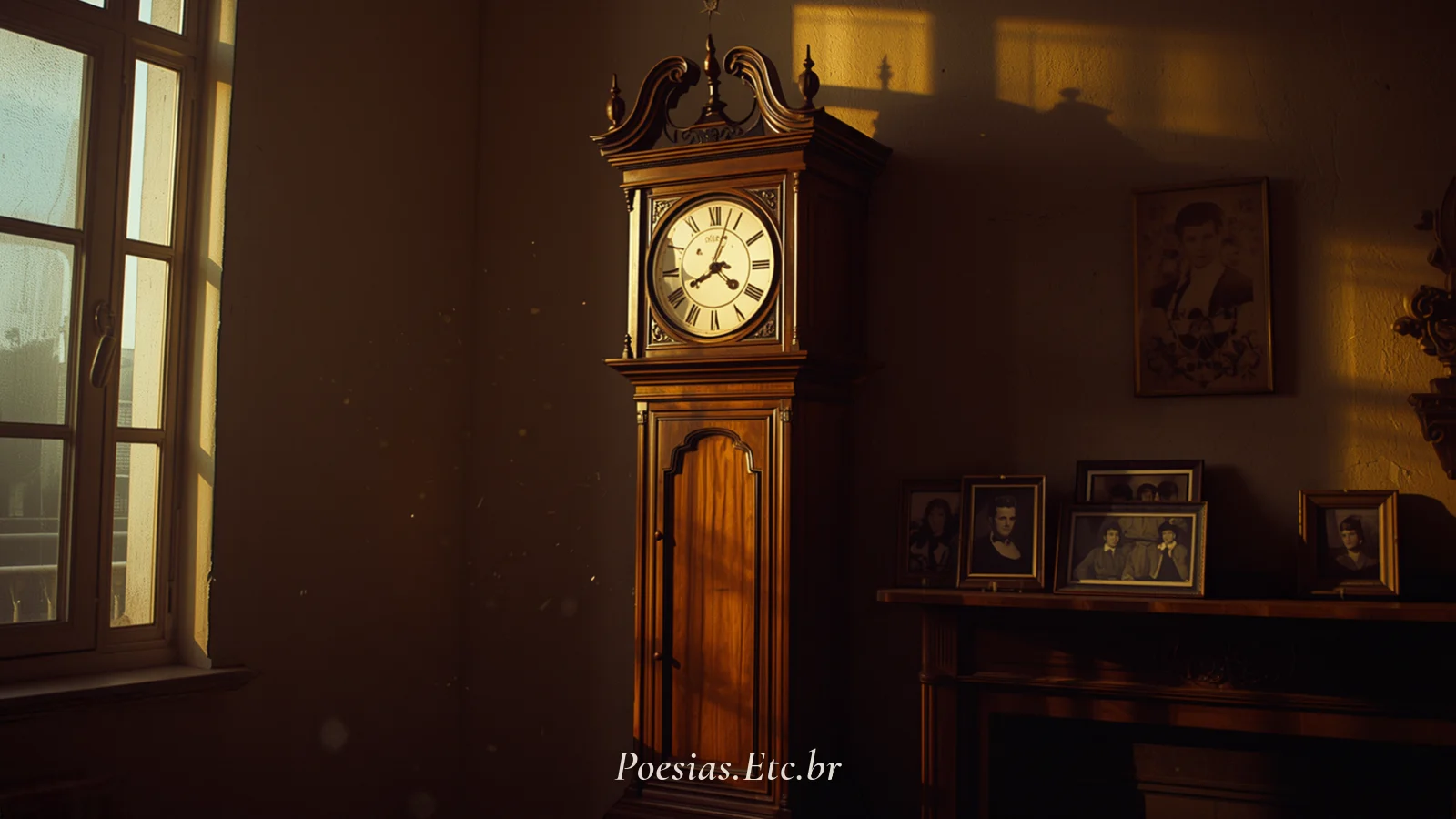
Beatriz tinha trinta e quatro anos e um relógio de chão grande demais pro apartamento dela, herdado da avó Inês junto com uma cristaleira que ela já tinha vendido e uma coleção de pratos que doou pra igreja do bairro.
O relógio ficou porque ninguém mais na família queria carregar aquele peso, literal e do outro tipo também. Beatriz colocou na sala, mais por falta de coragem de vender que por afeto de verdade, e passou os primeiros meses sem prestar muita atenção nele além de dar corda uma vez por semana, do jeito que Inês tinha ensinado quando Beatriz era pequena.
Foi só no primeiro aniversário da morte da avó que ela notou a coisa esquisita.
* * *
Às três da tarde daquele dia — mesmo horário em que Inês tinha morrido, um ano antes, embora Beatriz só fosse perceber essa coincidência depois — o relógio bateu três badaladas normais. E então, no minuto seguinte, o ponteiro grande começou a andar pra trás.
Beatriz achou que estava vendo errado. Ficou olhando, parada no meio da sala com uma xícara de café esfriando na mão, enquanto o ponteiro voltava, devagar mas sem dúvida nenhuma, quinze minutos, trinta, quarenta e cinco.
E enquanto isso acontecia, o apartamento começou a cheirar a bolo de fubá.
Não tinha bolo nenhum na cozinha dela. Não assava havia semanas. Mas o cheiro era específico demais pra ser imaginação — era o bolo de fubá exato da avó, com aquela casquinha mais dura que Inês fazia de propósito, queimando um pouco a beirada.
Passada uma hora inteira, o ponteiro voltou a andar pra frente, normal, como se nada tivesse acontecido. O cheiro sumiu junto.
* * *
No ano seguinte, na mesma data, aconteceu de novo. Dessa vez Beatriz estava preparada, sentada perto do relógio esperando, quase científica na abordagem, com um caderno pra anotar o que percebesse.
O ponteiro voltou. O cheiro de bolo voltou. E dessa vez, no meio da hora, Beatriz ouviu, claramente, a voz da avó chamando da cozinha — não palavras exatas, mas o tom, a cadência específica que só Inês tinha, chamando “Bia” do jeito que só ela chamava.
Beatriz sentiu o peito apertar de um jeito que não sentia desde o velório.
Porque a verdade, que ela guardava fundo o suficiente pra quase esquecer nos dias normais, era esta: na última visita de verdade que fez à avó, três semanas antes dela morrer, Beatriz tinha passado a maior parte do tempo no celular, respondendo mensagem de trabalho, enquanto Inês contava uma história longa sobre a infância dela no interior. Beatriz lembrava de ter ouvido metade, talvez menos. Lembrava da avó parando no meio da frase, olhando pra ela com uma paciência que dói mais em retrospecto do que doeu na hora.
— Depois eu conto o resto — Inês tinha dito, gentil, sem cobrança nenhuma na voz, o que tornava tudo pior.
Não teve depois.
* * *
No terceiro ano, Beatriz decidiu tentar uma coisa diferente. Quando o ponteiro começou a voltar, ela não ficou só observando. Foi até a cozinha, mesmo sem saber direito o que esperava encontrar lá, e sentou na mesa como se a avó estivesse mesmo do outro lado.
— Vovó, eu queria ouvir o resto da história — falou, em voz alta, sentindo-se um pouco boba, mas continuando mesmo assim. — A do interior. Eu só ouvi metáde.
Nada respondeu com palavras. Mas o cheiro de bolo ficou mais forte, e por um instante — só um instante, rápido o suficiente pra ela duvidar depois se tinha acontecido de verdade — Beatriz teve a sensação clara de uma mão pousando no ombro dela, do jeito que a avó fazia quando ia continuar contando alguma coisa.
Ela ficou ali, quieta, deixando o silêncio ser suficiente. Não precisou de palavras pra sentir que, daquela vez, estava realmente presente, prestando atenção de verdade em alguma coisa que talvez nunca mais fosse poder recuperar.
* * *
Quando a hora acabou e o ponteiro voltou a andar pra frente, Beatriz ligou pra mãe, coisa que não fazia com frequência suficiente havia anos.
— Mãe, você conhece alguma história da vovó sobre a infância dela no interior?
A mãe ficou surpresa com a pergunta, mas começou a contar o que lembrava — fragmentos, incompletos, diferentes dos que Beatriz já tinha ouvido, mas reais o suficiente pra preencher um pouco do vazio.
— Por que você tá perguntando isso agora? — quis saber a mãe.
Beatriz olhou pro relógio, andando normal de novo, marcando a hora certa como se nunca tivesse feito outra coisa.
— Porque eu percebi que não dava mais tempo de pedir pra vovó terminar de contar. Mas talvez ainda dê tempo de pedir pra você.
* * *
No quarto ano, na mesma data, Beatriz esperou sentada perto do relógio, com um caderno cheio agora das histórias que a mãe tinha contado ao longo dos meses, que ela vinha registrando aos poucos, sem pressa, do jeito que devia ter feito com a própria avó.
O ponteiro não voltou.
Ficou parado no lugar certo, três da tarde, e seguiu em frente normalmente, sem nenhum desvio, sem cheiro de bolo nenhum.
Beatriz sentiu, mais do que decepção, uma espécie de paz estranha. Como se o relógio tivesse entendido que ela já tinha aprendido o que precisava aprender — que presta atenção em gente viva importa mais do que tentar recuperar tempo com gente que já se foi.
Continuou dando corda no relógio toda semana, do jeito que a avó tinha ensinado. Mas agora, quando visitava a mãe, deixava o celular no carro.
Grandma Inês’s Clock
Beatriz was thirty-four and owned a grandfather clock too large for her apartment, inherited from her grandmother Inês along with a china cabinet she’d already sold and a set of plates she’d donated to the neighborhood church.
The clock stayed because no one else in the family wanted to carry that weight, literal and the other kind too. Beatriz put it in the living room, more out of a lack of nerve to sell it than any real affection, and spent the first few months barely paying it any attention beyond winding it once a week, the way Inês had taught her when she was little.
It wasn’t until the first anniversary of her grandmother’s death that she noticed something odd.
* * *
At three in the afternoon that day — the same hour Inês had died, a year before, though Beatriz wouldn’t notice that coincidence until later — the clock struck three normal chimes. And then, the very next minute, the big hand started moving backward.
Beatriz thought she was seeing things wrong. She stood frozen in the middle of the living room, a cup of coffee going cold in her hand, as the hand went back, slowly but unmistakably, fifteen minutes, thirty, forty-five.
And while it happened, the apartment began to smell of cornmeal cake.
There was no cake anywhere in her kitchen. She hadn’t baked in weeks. But the smell was too specific to be imagination — it was her grandmother’s exact cornmeal cake, that harder crust Inês made on purpose, the edges just slightly burnt.
A full hour later, the hand went back to moving forward, normal, as if nothing had happened. The smell disappeared with it.
* * *
The following year, on the same date, it happened again. This time Beatriz was ready, sitting near the clock waiting, almost scientific in her approach, with a notebook to jot down whatever she noticed.
The hand went back. The smell of cake came again. And this time, partway through the hour, Beatriz heard, clearly, her grandmother’s voice calling from the kitchen — not exact words, but the tone, the specific cadence only Inês had, calling "Bia" the way only she did.
Beatriz felt her chest tighten in a way it hadn’t since the funeral.
Because the truth, buried deep enough that she almost forgot it on ordinary days, was this: on the last real visit she’d made to her grandmother, three weeks before she died, Beatriz had spent most of the time on her phone, answering work messages, while Inês told a long story about her childhood in the countryside. Beatriz remembered hearing half of it, maybe less. She remembered her grandmother trailing off mid-sentence, looking at her with a patience that hurts more in hindsight than it did at the time.
"I’ll tell you the rest later," Inês had said, gently, no reproach at all in her voice, which made everything worse.
There was no later.
* * *
In the third year, Beatriz decided to try something different. When the hand started going back, she didn’t just watch. She went to the kitchen, not quite sure what she expected to find there, and sat at the table as if her grandmother were really on the other side of it.
"Grandma, I wanted to hear the rest of the story," she said, out loud, feeling a little foolish but continuing anyway. "The one about the countryside. I only heard half."
Nothing answered with words. But the smell of cake grew stronger, and for an instant — just an instant, quick enough that she’d doubt afterward whether it had really happened — Beatriz had the clear sensation of a hand resting on her shoulder, the way her grandmother used to when she was about to keep telling a story.
She sat there, quiet, letting the silence be enough. She didn’t need words to feel that, this time, she was truly present, truly paying attention to something she might never get to recover again.
* * *
When the hour ended and the hand went back to moving forward, Beatriz called her mother, something she hadn’t done often enough in years.
"Mom, do you know any story Grandma told about her childhood in the countryside?"
Her mother was surprised by the question, but started telling what she remembered — fragments, incomplete, different from the ones Beatriz had already heard, but real enough to fill in a little of the emptiness.
"Why are you asking about this now?" her mother wanted to know.
Beatriz looked at the clock, ticking forward again, marking the correct time as though it had never done anything else.
"Because I realized there’s no more time to ask Grandma to finish telling it. But maybe there’s still time to ask you."
* * *
In the fourth year, on the same date, Beatriz waited sitting near the clock, with a notebook now full of the stories her mother had told over the months, which she’d been recording little by little, unhurried, the way she should have with her grandmother herself.
The hand didn’t go back.
It sat right where it was, three in the afternoon, and kept moving forward normally, no detour at all, no smell of cake at all.
Beatriz felt, more than disappointment, a strange kind of peace. As if the clock had understood that she’d already learned what she needed to learn — that paying attention to the living matters more than trying to recover time with the ones who are already gone.
She kept winding the clock every week, the way her grandmother had taught her. But now, when she visited her mother, she left her phone in the car.
O que você achou?
Escreva o que este texto provocou em você. Leio tudo o que chega.