Um maquinista aposentado ainda caminha toda semana pelos trilhos desativados perto de sua cidade em Minas Gerais. O filho acha que é hora de parar. A linha, de vez em quando, parece discordar.
Seu Belchior tinha setenta e um anos e caminhava os trilhos toda terça-feira, chovesse ou fizesse sol, desde que a Central desativou o ramal em 1997.
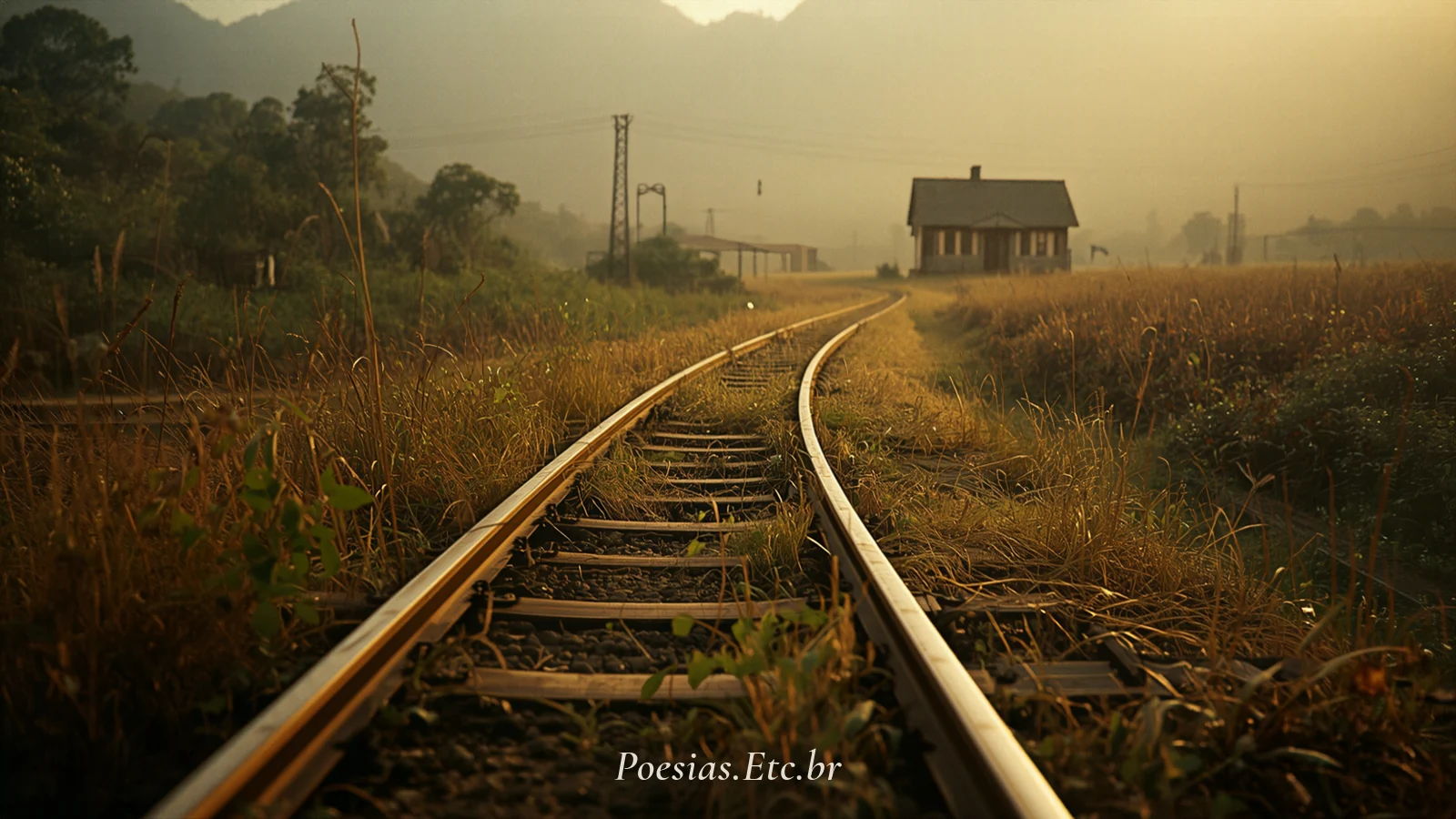
Não tinha mais trem. Tinha capim entre os dormentes, ferrugem grossa nos trilhos, e num trecho, perto do córrego, os postes de sinalização caídos como se alguém tivesse desistido no meio do trabalho de derrubar tudo. Belchior levava uma bengala que não precisava, mais por costume do que por necessidade, e ia até onde a linha fazia a curva perto do que sobrou da estação de Vista Alegre, um casarão de tijolo aparente com o telhado cedendo de um lado.
Trinta e dois anos ele tinha rodado aquele trecho de maquinista. Conhecia cada curva pelo jeito que o trem se inclinava, cada ponte pelo som que fazia debaixo da composição. Sabia, sem precisar olhar o relógio, a que horas o sol batia direto no para-brisas da locomotiva entre Vista Alegre e o próximo povoado.
O filho, Ronaldo, motorista de ônibus intermunicipal, achava aquilo uma perda de tempo perigosa. Vinha visitar a mãe — quer dizer, visitar o pai, porque a mãe tinha morrido fazia nove anos, mas Ronaldo ainda falava assim, por engano, e os dois fingiam não notar — e sempre voltava no assunto.
— O senhor vai se machucar lá sozinho um dia desses. Podia caminhar na praça que nem todo mundo.
— Praça não vai a lugar nenhum — respondia Belchior, e não explicava mais que isso, porque a explicação inteira levava tempo demais e ele não sabia por onde começar.
* * *
A parte que ele nunca contou para Ronaldo era esta: no dia 14 de março de 1997, último dia de operação do ramal, Belchior fez a última viagem de Vista Alegre até o entroncamento com a composição vazia, só ele e o ajudante, porque já tinham avisado que ninguém mais ia usar aquela linha. E foi nesse mesmo dia, enquanto ele fechava o registro de operação pela última vez, que o telefone do posto tocou avisando que Marina, a mulher dele, tinha entrado em trabalho de parto três semanas adiantado.
Ronaldo nasceu às dez da noite daquele dia. Belchior sempre contou essa parte — o nascimento, a correria, o susto — mas nunca contou a outra metade, que era: o dia em que ganhou o filho foi o mesmo dia em que perdeu a linha inteira que tinha sido sua vida desde os dezenove anos. As duas coisas ficaram coladas na memória dele feito duas fotos na mesma página de álbum, e ele nunca conseguiu olhar uma sem ver a outra.
Caminhar os trilhos, para ele, nunca foi sobre o trem. Era sobre não deixar as duas fotos se separarem.
* * *
Na terça-feira em questão, o céu estava daquele jeito cinza-claro que ameaça chuva sem cumprir, e Belchior chegou na curva de Vista Alegre por volta das quatro da tarde. Foi aí que viu a luz.
Não era reflexo. Não era engano de vista cansada. A estação — aquele casarão caído, com capim saindo da janela — estava com as luzes acesas, do jeito que ficava quando ainda tinha movimento: a lâmpada amarela sobre a porta da bilheteria, o letreiro pintado de fresco dizendo VISTA ALEGRE, e um homem de uniforme cinza — o uniforme que o próprio Belchior usava em 1997 — varrendo a plataforma como se um trem fosse passar dali a pouco.
Belchior parou. Não teve medo, curiosamente. Teve uma vontade quase física de chegar mais perto, do jeito que a gente sente vontade de voltar pra dentro de casa quando começa a chover.
Andou até a plataforma. O homem de uniforme não virou o rosto pra ele, só continuou varrendo, e Belchior reconheceu o próprio jeito de segurar a vassoura, meio torto pro lado esquerdo por causa de um ombro que doeu a vida inteira.
— Vai atrasar? — perguntou o homem, sem parar de varrer.
— Atrasar o quê?
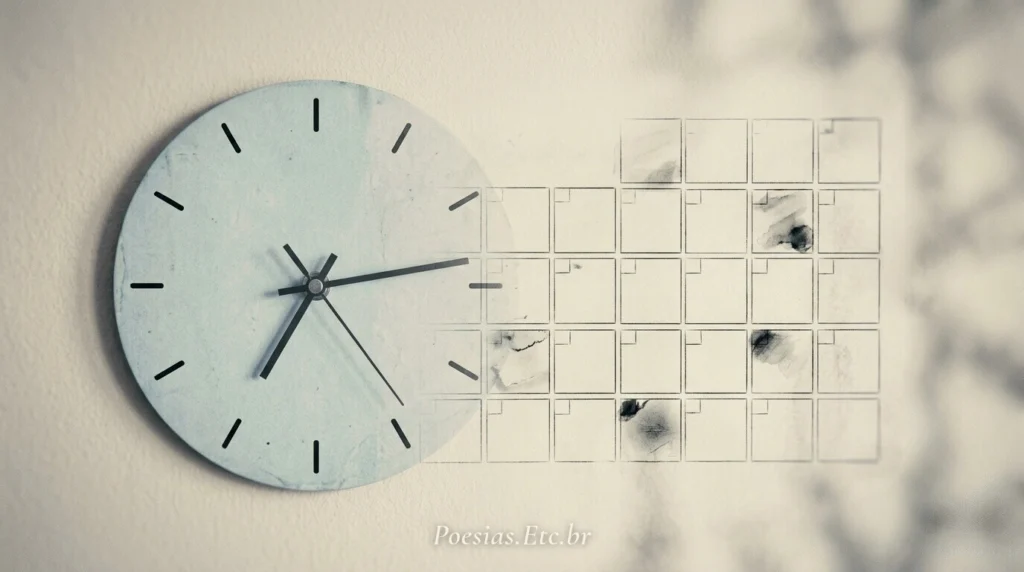
— O trem. — O homem apontou com a cabeça pro relógio da estação, que marcava 21h47, embora lá fora fossem quatro da tarde. — Ela falou que vinha correndo.
Belchior sentiu o estômago virar. Marina tinha ido pro hospital às pressas naquela noite, e ele tinha deixado o último trem sem saber se chegaria a tempo de vê-la.
— Ela chegou bem — disse Belchior, com a voz mais fraca do que queria. — O menino nasceu bem. Já tem trinta anos.
O homem parou de varrer, pela primeira vez, e olhou pra ele. Não tinha rosto exatamente definido — Belchior via os traços, mas eles não ficavam parados, como uma foto tremida — mas alguma coisa no jeito de ficar quieto era inconfundível.
— Trinta anos — repetiu o homem, baixinho. — E o senhor ainda vem aqui checar se o trem passou.
Não era pergunta. Era o tipo de frase que já sabe a resposta antes de terminar de ser dita.
* * *
Belchior não dormiu direito naquela noite. Na quarta-feira ligou pro filho, coisa que quase nunca fazia por iniciativa própria.
— Pai? Aconteceu alguma coisa?
— Nada. Queria saber se você vem semana que vem.
— Posso vir sexta. Por quê?
— Quero te mostrar uma coisa nos trilhos.
Ronaldo ficou quieto do outro lado por um tempo maior do que uma ligação de trabalho costuma permitir.
— Tá bom, pai. Eu vou.
* * *
Na sexta, os dois caminharam juntos até Vista Alegre. Belchior não contou o que esperava encontrar, porque nem ele sabia direito, e uma parte dele já se preparava pra decepção de chegar lá e achar só o casarão caído de sempre, capim na janela, nada mais.
Foi o que encontraram.
Nenhuma luz. Nenhum homem varrendo. Só o telhado cedendo mais um pouco do que Belchior lembrava, e uma lagartixa correndo pela parede onde antes ficava o letreiro.
Ronaldo olhou em volta, sem entender direito o que devia estar vendo.
— É só isso? A estação velha?
Belchior sentou numa pedra perto do que sobrou da plataforma, cansado de um jeito que não era só físico.
— Sabe que dia você nasceu?
— Sei. Catorze de março.
— Foi o último dia que eu rodei essa linha. Última viagem, último trem, e no meio do fechamento tocou o telefone avisando que sua mãe tinha entrado em trabalho de parto.
Ronaldo sentou do lado dele, devagar.
— O senhor nunca contou isso.
— Nunca contei porque não sabia separar as duas coisas. Ganhar você e perder isso aqui — Belchior fez um gesto pra linha inteira, pros trilhos sumindo no mato — sempre foram a mesma lembrança pra mim. E eu acho que vinha aqui tentando decidir qual das duas eu ia escolher guardar. Como se desse pra escolher só uma.
Ficaram calados um tempo, ouvindo o vento no capim.
— Pai. O senhor podia ter me trazido aqui antes.
— Podia. Não sabia como.
— E agora sabe?
Belchior olhou pro casarão caído, pra plataforma vazia, pro letreiro que não existia mais nem em tinta.
— Agora eu só sei que não precisava mais vir sozinho.
* * *
Continuaram andando juntos depois disso, não toda semana, mas de vez em quando, quando Ronaldo tinha uma folga que coincidia com uma terça. Nunca mais apareceu luz nenhuma na estação, nem homem varrendo plataforma nenhuma. Belchior parou de esperar que aparecesse.
Mas numa dessas caminhadas, já no fim de tarde, com o filho do lado contando uma história qualquer do trabalho, Belchior percebeu que tinha passado o trecho inteiro sem checar o relógio da estação nem uma vez.
E percebeu, com uma calma que não esperava sentir, que a linha continuava ali, do jeito que sempre esteve — só que agora servia pra alguma coisa de novo. Não pra levar trem nenhum a lugar nenhum. Pra levar ele e o filho, uma terça de cada vez, até o mesmo lugar que os dois já estavam há trinta anos sem precisar de trilho pra chegar.
The Station That Never Arrives
Belchior was seventy-one years old, and he walked the tracks every Tuesday, rain or shine, ever since the rail authority shut the branch line down in 1997.
There was no train anymore. Grass grew between the ties, rust sat thick on the rails, and in one stretch, near the creek, the signal posts lay knocked flat, as though someone had given up halfway through tearing the whole thing out. Belchior carried a cane he didn’t really need, more out of habit than necessity, and walked as far as the bend where the line curved past what was left of Vista Alegre station, a bare-brick building with its roof sagging on one side.
He’d driven that stretch for thirty-two years. He knew every curve by the way the train leaned into it, every bridge by the sound it made underneath the cars. He knew, without checking a watch, exactly what hour the sun hit the locomotive’s windshield square between Vista Alegre and the next town over.
His son, Ronaldo, an intercity bus driver, thought it was a dangerous waste of time. He’d come visit his mother — well, visit his father, because his mother had died nine years back, but Ronaldo still said it that way, by mistake, and the two of them pretended not to notice — and he always circled back to the subject.
“You’re going to get hurt out there alone one of these days. You could walk the square like everybody else.”
“The square doesn’t go anywhere,” Belchior would answer, and he never explained further than that, because the full explanation took too long and he didn’t know where to start.
* * *
The part he never told Ronaldo was this: on March 14th, 1997, the last day the branch line operated, Belchior made the final run from Vista Alegre to the junction with an empty train, just him and his assistant, since word had already gone out that no one would be using that line again. And it was that same day, while he was closing the operations log for the last time, that the phone at the depot rang to tell him that Marina, his wife, had gone into labor three weeks early.
Ronaldo was born at ten that night. Belchior always told that part — the birth, the rush, the scare — but never the other half, which was: the day he gained his son was the same day he lost the line that had been his whole life since he was nineteen. The two things stayed stuck together in his memory like two photographs on the same album page, and he could never look at one without seeing the other.
Walking the tracks, for him, was never about the train. It was about not letting the two photographs come apart.
* * *
On the Tuesday in question, the sky had that pale gray look that threatens rain without ever delivering, and Belchior reached the Vista Alegre bend around four in the afternoon. That’s when he saw the light.
It wasn’t a reflection. It wasn’t tired eyes playing tricks. The station — that collapsed old building, grass sprouting from the windows — had its lights on, the way it used to when trains still ran: the yellow bulb over the ticket window, a freshly painted sign reading VISTA ALEGRE, and a man in a gray uniform — the same uniform Belchior himself had worn in 1997 — sweeping the platform as if a train were due any minute.
Belchior stopped. He wasn’t afraid, oddly enough. He felt an almost physical pull to get closer, the way you feel pulled back indoors the moment it starts to rain.
He walked up to the platform. The man in uniform didn’t turn to look at him, just kept sweeping, and Belchior recognized his own way of holding a broom, tilted a little to the left from a shoulder that had ached his whole life.
“Running late?” the man asked, without stopping.
“Late for what?”
“The train.” The man nodded toward the station clock, which read 9:47 p.m., though outside it was four in the afternoon. “She said she was on her way.”
Belchior’s stomach turned over. Marina had rushed to the hospital that night, and he hadn’t known if he’d make it in time to see her.
“She made it fine,” Belchior said, his voice weaker than he wanted it to be. “The boy was born fine. He’s thirty now.”
The man stopped sweeping, for the first time, and looked at him. His face wasn’t exactly fixed — Belchior could make out the features, but they wouldn’t hold still, like a blurred photograph — but something about the way he went quiet was unmistakable.
“Thirty years,” the man repeated, quietly. “And you still come out here to check if the train got through.”
It wasn’t a question. It was the kind of sentence that already knows the answer before it’s finished being said.
* * *
Belchior didn’t sleep well that night. On Wednesday he called his son, something he almost never did on his own.
“Dad? Is something wrong?”
“Nothing’s wrong. I wanted to know if you’re coming next week.”
“I can come Friday. Why?”
“I want to show you something on the tracks.”
Ronaldo went quiet on the other end for longer than a work call usually allows.
“Okay, Dad. I’ll come.”
* * *
On Friday the two of them walked together to Vista Alegre. Belchior didn’t say what he expected to find, because he wasn’t sure himself, and part of him was already bracing for the disappointment of getting there and finding nothing but the same collapsed building, grass in the windows, nothing more.
That’s what they found.
No light. No man sweeping. Just the roof sagging a little further than Belchior remembered, and a lizard darting across the wall where the sign used to hang.
Ronaldo looked around, not quite sure what he was supposed to be seeing.
“That’s it? The old station?”
Belchior sat down on a stone near what was left of the platform, tired in a way that wasn’t only physical.
“Do you know what day you were born?”
“I do. March fourteenth.”
“That was the last day I ran this line. Last trip, last train, and right in the middle of closing it out the phone rang to tell me your mother had gone into labor.”
Ronaldo sat down next to him, slowly.
“You never told me that.”
“I never told anyone, because I never knew how to pull the two things apart. Gaining you and losing this” — Belchior gestured at the whole line, at the tracks disappearing into the brush — “have always been the same memory to me. And I think I kept coming out here trying to decide which one I was going to choose to keep. Like there was ever a way to choose just one.”
They sat in silence a while, listening to the wind move through the grass.
“Dad. You could have brought me here before.”
“I could have. Didn’t know how.”
“Do you know now?”
Belchior looked at the collapsed building, at the empty platform, at the sign that no longer existed even in paint.
“Now I just know I didn’t need to keep coming here alone.”
* * *
They kept walking together after that, not every week, but now and then, whenever Ronaldo had a day off that fell on a Tuesday. No light ever appeared at the station again, no man ever swept that platform again. Belchior stopped expecting it to.
But on one of those walks, late in the afternoon, with his son beside him telling some story or other about work, Belchior realized he’d gone the whole stretch without checking the station clock even once.
And he realized, with a calm he hadn’t expected to feel, that the line was still there, the way it always had been — except now it was good for something again. Not for carrying any train anywhere. For carrying him and his son, one Tuesday at a time, to the same place the two of them had already been standing for thirty years without ever needing rails to get there.
O que você achou?
Escreva o que este texto provocou em você. Leio tudo o que chega.