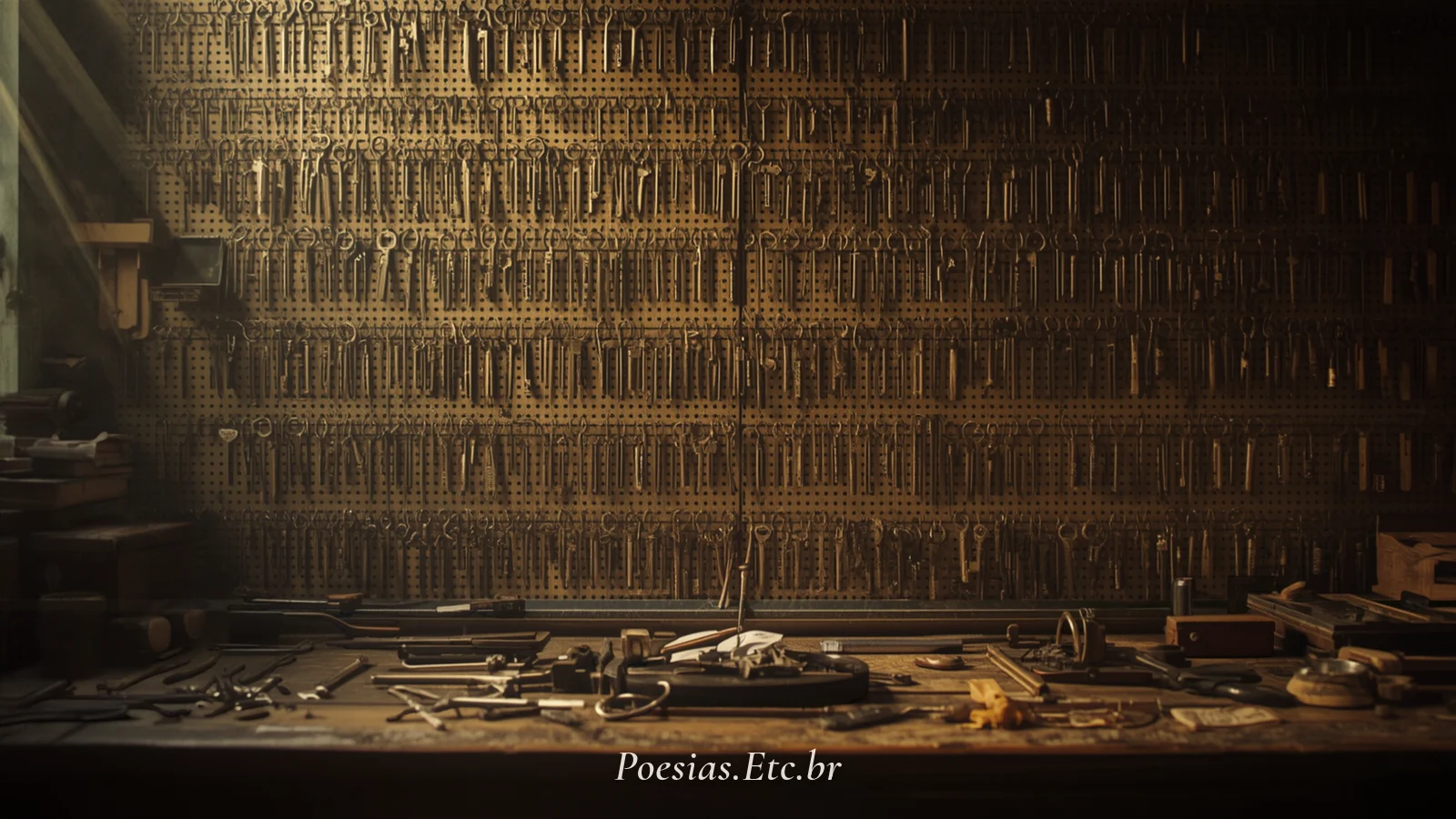
Há trinta anos um chaveiro de São Paulo guarda uma cópia de cada fechadura que já abriu. Quando a única cliente que ainda o chamava pelo nome morre, ele precisa decidir o que fazer com tudo o que nunca usou.
Seu Osvaldo tinha sessenta e oito anos e uma caixa de sapato cheia de chaves que não eram dele.
Chapa 27, alameda Santos: a fechadura da dona Marlene, 1994. Chapa 41: o portão dos Kimura, que emperrava toda vez que chovia. Chapa 63: um cadeado de galpão que ele nem lembrava mais de quem era. A regra ele nunca falou em voz alta para ninguém, nem para a mulher, enquanto ela foi viva: toda fechadura que passava pela mão dele, ele cortava uma cópia a mais e guardava. Não para entrar. Só para saber que podia, se um dia alguém precisasse e não tivesse mais ninguém.
A loja ficava entre uma sapataria que já tinha fechado duas vezes com nome diferente e uma padaria que começava a cheirar a pão antes das cinco. Osvaldo abria às oito, passava um pano no vidro do mostruário, ligava a máquina de copiar e esperava o dia trazer o que trazia — uma chave partida dentro do miolo, um cadeado emperrado, alguém que tinha trocado de bolsa e esquecido tudo dentro da velha.
Dona Amélia vinha uma vez por mês, mais ou menos, sempre com um motivo pequeno demais para precisar de um chaveiro. Uma vez foi trocar a pilha do controle do portão. Outra vez foi só perguntar se ele sabia consertar dobradiça, e ele sabia, mas ela nunca trazia a dobradiça. Ela sentava na cadeira de plástico ao lado da porta, aquela que Osvaldo mantinha ali havia vinte anos só para isso, e ficava contando as novidades do prédio como se ele fosse gente da família. Chamava ele de Osvaldo, sem seu, sem senhor. Ninguém mais fazia isso desde que a mulher dele morreu.
Em algum sábado de outubro de 2009 — ele não marcou a data, mas sabia pelo modelo do miolo, que só entrou no mercado naquele ano — ela trouxe a chave do apartamento 62 para trocar o segredo, porque tinha brigado com o zelador e não confiava mais nele com a cópia reserva. Osvaldo trocou. E, como sempre fazia, cortou uma via a mais, escreveu 62-A no rótulo e guardou na caixa.
Ele nunca subiu naquele apartamento. Nunca foi convidado, nunca perguntou. A chave ficava lá, entre as outras, um nome numa fileira de nomes, até que dona Amélia morreu em fevereiro, de repente, do jeito que os médicos chamam de tranquilo e que ninguém que ficou acha tranquilo coisa nenhuma.
* * *
Soube pela padeira, que soube pela faxineira do prédio. Fechou a loja mais cedo naquele dia, uma coisa que não fazia desde o enterro da mulher, e ficou sentado na cadeira de plástico olhando pra rua até escurecer.
Uma semana depois, viu o irmão dela — um homem mais novo, com jeito de quem mora em outro estado e voltou só para resolver — supervisionando dois rapazes que carregavam móveis para uma caçamba estacionada na calçada. Osvaldo atravessou a rua sem saber direito por quê.
— Vocês vão vender o apartamento?
— Vamos limpar primeiro. Depois vê. — O homem nem olhou direito pra ele. — A senhora guardava muita coisa. Papel, essas coisas de gente antiga.
Papel. Osvaldo pensou na cadeira de plástico, nas conversas sobre nada, na única pessoa que perguntava como ele tinha dormido.
— Ela nunca falou de mim? Osvaldo, o chaveiro.
O homem deu de ombros, já virando as costas. — Ela falava de muita gente.
Isso doeu mais do que devia.
* * *
A caçamba ficou ali três dias. No terceiro, um dos rapazes carregava uma caixa de papelão mole de tanto peso, o fundo já rasgando, e um monte de envelopes escorregou na calçada. Osvaldo, sem pensar, abaixou pra ajudar a recolher. Um dos envelopes tinha o selo antigo, daqueles que não existem mais, e o nome dela na frente com uma letra que não era a dela.
— Pode deixar isso, o senhor não precisa — disse o rapaz, já enfiando tudo de volta na caixa maltratada, sem cuidado nenhum, como quem enfia roupa suja.
Osvaldo devolveu os que tinha nas mãos. Mas ficou de olho onde a caixa foi parar dentro da caçamba, perto da beirada, embaixo de um abajur quebrado.
Naquela noite ele não conseguiu dormir direito. Ficou pensando na chave 62-A, no rótulo escrito à mão, na regra que ele tinha inventado sozinho havia trinta anos sem nunca testar se ela significava alguma coisa. Guardar a cópia sempre foi fácil. A parte difícil, ele entendeu ali, deitado, era saber para que serve uma chave que ninguém nunca pediu para você usar.
Às quatro da manhã ele se levantou, vestiu a calça do dia anterior e foi até a caçamba.
* * *
A rua estava vazia do jeito que só fica antes do padeiro chegar. Ele tirou a caixa de dentro da caçamba — mais leve do que parecia, o abajur tinha caído para o lado — e sentou na calçada com ela no colo, sem entrar em lugar nenhum, sem usar a chave 62-A pra coisa nenhuma. Só abriu a caixa ali mesmo, debaixo do poste.
Eram cartas. Trinta anos de cartas, mais ou menos, a julgar pelos selos, de um homem chamado Aurélio que Osvaldo nunca tinha ouvido dona Amélia mencionar. Não tinha nada de escandaloso nelas, pelo que ele leu por cima, com vergonha de estar lendo e incapaz de parar — só um homem contando o dia dele para uma mulher, ano após ano, num tom que Osvaldo reconheceu porque era o mesmo tom que ele próprio usava com a mulher, antes.
Na última, datada de dois anos atrás, Aurélio escrevia que não conseguia mais fazer a viagem, que as pernas não ajudavam, que sentia falta da cadeira perto da janela dela. Não tinha assinatura de resposta. Talvez ela tivesse respondido por telefone. Talvez não tivesse respondido nada.
Osvaldo pensou no irmão dela, no jeito que falou “ela falava de muita gente”, como se trinta anos de cartas coubessem dentro de uma caçamba ao lado de um abajur quebrado.
* * *
De manhã, quando o irmão apareceu para supervisionar o resto da mudança, Osvaldo já estava esperando na calçada com a caixa nos braços, o fundo reforçado com fita adesiva que ele tinha em casa desde sempre.
— Isso aqui não é lixo — disse, sem rodeio, porque não sabia fazer rodeio. — A senhora sua irmã guardou isso trinta anos. Achei que o senhor ia querer saber.
O homem olhou a caixa, depois olhou pra ele, com uma desconfiança que foi baixando aos poucos conforme abria um dos envelopes e via a letra.
— Eu não sabia de nenhum Aurélio.
— Eu também não. Ela nunca me contou. — Osvaldo hesitou. — Ela não contava tudo pra ninguém. Acho que essa era a parte dela que ela guardava só pra ela.
O irmão ficou ali, folheando, e alguma coisa no rosto dele foi ficando mais mole, menos apressado.
— O senhor é o chaveiro.
— Sou.
— Ela comentou o senhor, sim. — Ele fechou a caixa. — Falou que era a única pessoa no prédio que não pedia nada em troca de conversar com ela.
Osvaldo não soube o que responder a isso, então não respondeu nada, e os dois ficaram um tempo ali, do jeito que dois homens ficam quando não têm mais o que dizer mas também não querem ainda ir embora.
* * *
Voltou pra loja depois, com a chave 62-A ainda no bolso, e antes de abrir pegou a caixa de sapato inteira e despejou tudo em cima do balcão. Trinta anos de chapas, de números, de gente que ele mal lembrava o rosto.
Não jogou fora. Isso ele não conseguiu. Mas separou um punhado — os clientes que já tinham morrido, os prédios que já tinham sido demolidos, os nomes que ele nem sabia mais dizer de cabeça — e essas ele levou pessoalmente até a reciclagem de metal na esquina, uma por uma, como quem entrega alguma coisa em mão, não como quem joga fora.
A 62-A ficou. Não porque ele ainda achasse que ia precisar dela. Ficou porque era a única, de todas, que ele finalmente sabia exatamente o que representava: não a promessa de entrar, mas a prova de que alguém, uma vez, tinha confiado nele o bastante pra deixar ele guardar uma parte de casa.
Na segunda-feira ele pendurou a cadeira de plástico na parede, no lugar da fechadura mais velha da loja, feito enfeite. Continuou lá, vazia, mas agora fora do chão — não mais esperando ninguém sentar, só lembrando que alguém tinha sentado.
Um cliente novo entrou de tarde perguntando se ele copiava chave de motoca. Osvaldo disse que sim, olhou o modelo, ligou a máquina.
E cortou, como sempre, uma via a mais.
The Weight of Keys
Osvaldo was sixty-eight years old and owned a shoebox full of keys that weren’t his.
Tag 27, Alameda Santos: Dona Marlene’s lock, 1994. Tag 41: the Kimura family’s gate, the one that always stuck when it rained. Tag 63: a warehouse padlock he could no longer put a face to. The rule he’d never said out loud to anyone, not even to his wife while she was alive, was this: every lock that passed through his hands, he cut one extra copy and kept it. Not to let himself in. Just to know he could, if someone ever needed it and had no one else left.
The shop sat between a shoe-repair place that had closed twice under two different names and a bakery that started smelling of bread before five in the morning. Osvaldo opened at eight, wiped down the display case, switched on the cutting machine, and waited for whatever the day brought him — a key snapped off inside a lock, a stuck padlock, someone who’d switched purses and left everything locked inside the old one.
Dona Amélia came by about once a month, always with some reason too small to actually need a locksmith. Once it was to change the battery in her gate remote. Another time she just asked if he knew how to fix a hinge, though she never brought the hinge in. She’d sit in the plastic chair by the door — the one Osvaldo had kept there for twenty years for exactly this — and tell him the building gossip like he was family. She called him Osvaldo, no mister, no formalities. Nobody had done that since his wife died.
Some Saturday in October of 2009 — he never marked the date, but he knew it from the lock cylinder model, which had only come out that year — she brought in the key to apartment 62 to have the lock rekeyed, because she’d fallen out with the building super and no longer trusted him with the spare. Osvaldo rekeyed it. And, as always, he cut one extra, wrote 62-A on the tag, and dropped it in the box.
He never went up to that apartment. Never was invited, never asked. The key sat there among the others, one name in a row of names, until Dona Amélia died that February, suddenly, the way doctors call peaceful and nobody left behind ever finds peaceful at all.
* * *
He heard it from the bakery woman, who’d heard it from the building’s cleaner. He closed the shop early that day, something he hadn’t done since his wife’s funeral, and sat in the plastic chair watching the street until dark.
A week later he saw her brother — a younger man with the look of someone who lives out of state and had come back only to settle things — overseeing two young men carrying furniture out to a dumpster parked on the curb. Osvaldo crossed the street without quite knowing why.
“Are you going to sell the apartment?”
“Clean it out first. Figure out the rest after.” The man barely looked at him. “She kept a lot of things. Papers, that sort of stuff old people hold on to.”
Papers. Osvaldo thought of the plastic chair, the conversations about nothing, the one person who ever asked how he’d slept.
“Did she ever mention me? Osvaldo, the locksmith.”
The man shrugged, already turning away. “She talked about a lot of people.”
That stung more than it should have.
* * *
The dumpster sat there three days. On the third, one of the young men was hauling a cardboard box gone soft with weight, the bottom already tearing, and a pile of envelopes slid loose onto the sidewalk. Osvaldo, without thinking, bent down to help gather them. One envelope had an old-style stamp, the kind that doesn’t exist anymore, and her name on the front in handwriting that wasn’t hers.
“You don’t have to bother with that, sir,” the young man said, already shoving everything back into the ruined box, carelessly, the way you’d stuff dirty laundry.
Osvaldo handed back the ones in his hands. But he kept an eye on where the box landed inside the dumpster, near the edge, under a broken lamp.
He couldn’t sleep that night. He kept thinking about key 62-A, about the handwritten tag, about the rule he’d invented on his own thirty years ago without ever once testing whether it meant anything. Keeping the copy had always been the easy part. The hard part, he understood now, lying there, was knowing what a key was for when nobody had ever asked you to use it.
At four in the morning he got up, pulled on yesterday’s trousers, and walked to the dumpster.
* * *
The street was empty in the way it only is before the baker arrives. He lifted the box out — lighter than it looked, the lamp had tipped to one side — and sat down on the curb with it in his lap, without going anywhere, without once using key 62-A for anything at all. He just opened the box right there, under the streetlight.
They were letters. Thirty years’ worth, more or less, judging by the postmarks, from a man named Aurélio whom Osvaldo had never once heard Dona Amélia mention. Nothing scandalous in them, as far as he skimmed, ashamed to be reading and unable to stop — just a man recounting his day to a woman, year after year, in a tone Osvaldo recognized because it was the same tone he himself had used with his wife, once.
In the last one, dated two years back, Aurélio wrote that he couldn’t make the trip anymore, that his legs wouldn’t let him, that he missed the chair by her window. There was no reply tucked in with it. Maybe she’d answered by phone. Maybe she hadn’t answered at all.
Osvaldo thought about her brother, about the way he’d said she talked about a lot of people, as if thirty years of letters could fit inside a dumpster next to a broken lamp.
* * *
In the morning, when the brother showed up to oversee the rest of the move, Osvaldo was already waiting on the sidewalk with the box in his arms, its bottom reinforced with tape he kept at home for exactly this kind of thing.
“This isn’t trash,” he said, no preamble, because he didn’t know how to do preamble. “Your sister kept this for thirty years. I figured you’d want to know.”
The man looked at the box, then at him, suspicion easing bit by bit as he opened one of the envelopes and saw the handwriting.
“I never knew about any Aurélio.”
“Neither did I. She never told me.” Osvaldo hesitated. “She didn’t tell everyone everything. I think this was the part she kept just for herself.”
The brother stood there, leafing through them, and something in his face went softer, less rushed.
“You’re the locksmith.”
“I am.”
“She mentioned you, actually.” He closed the box. “Said you were the only one in the building who didn’t want anything in return for talking to her.”
Osvaldo didn’t know what to say to that, so he said nothing, and the two of them stood there a while, the way two men do when they’ve run out of things to say but aren’t ready to leave yet either.
* * *
He went back to the shop after, key 62-A still in his pocket, and before opening up he took the whole shoebox and dumped it out on the counter. Thirty years of tags, of numbers, of faces he could barely remember.
He didn’t throw it out. He couldn’t do that. But he set aside a handful — the clients who’d since died, the buildings that had since been torn down, the names he could no longer say from memory — and those he carried, one by one, to the scrap metal place on the corner, the way you’d hand something over in person, not the way you’d throw something away.
62-A stayed. Not because he still thought he’d need it. It stayed because it was the only one, out of all of them, that he finally understood exactly what it stood for: not the promise of getting in, but the proof that someone, once, had trusted him enough to let him hold on to a piece of home.
On Monday he hung the plastic chair on the wall, in the spot where the shop’s oldest lock used to hang as decoration. It stayed there, empty, but off the floor now — no longer waiting for someone to sit, just remembering that someone once had.
A new customer walked in that afternoon asking if he cut motorcycle keys. Osvaldo said he did, looked over the model, switched on the machine.
And cut, as always, one extra.
O que você achou?
Escreva o que este texto provocou em você. Leio tudo o que chega.